


‘The idea that nitrogen will cause the heath to grow over is a myth’
400 dairy cows
1 Barn-E manure robot
Reading time: 5 minutes
Agricultural company Hasman from Beuningen has got its act together. Specialising in dairy cattle and agriculture, energy and nature management, the company is an exemplary model of circular agriculture. This enterprise in the middle of a Natura 2000 site is more than able to look after itself. We spoke to Hans Roeleveld, one of the owners of Hasman, about the company’s rich history and current situation.
Back to the Middle Ages
Hasman’s history goes way back. The first description of the farm was in the fief register of the Count of Bentheim in the Middle Ages. Hans’s grandfather was the first Roeleveld to get hold of the farm. His son took it over, then passed the baton to his 2 sons, Alfons and Hans.
The children of these 2 brothers are now also involved with Hasman. ‘I’d be really happy if our children could continue the business,’ says Hans. ‘It goes back so far, and we’ve got some amazing natural areas. It would be a waste of catastrophic proportions if we couldn’t continue to work here in the future.’
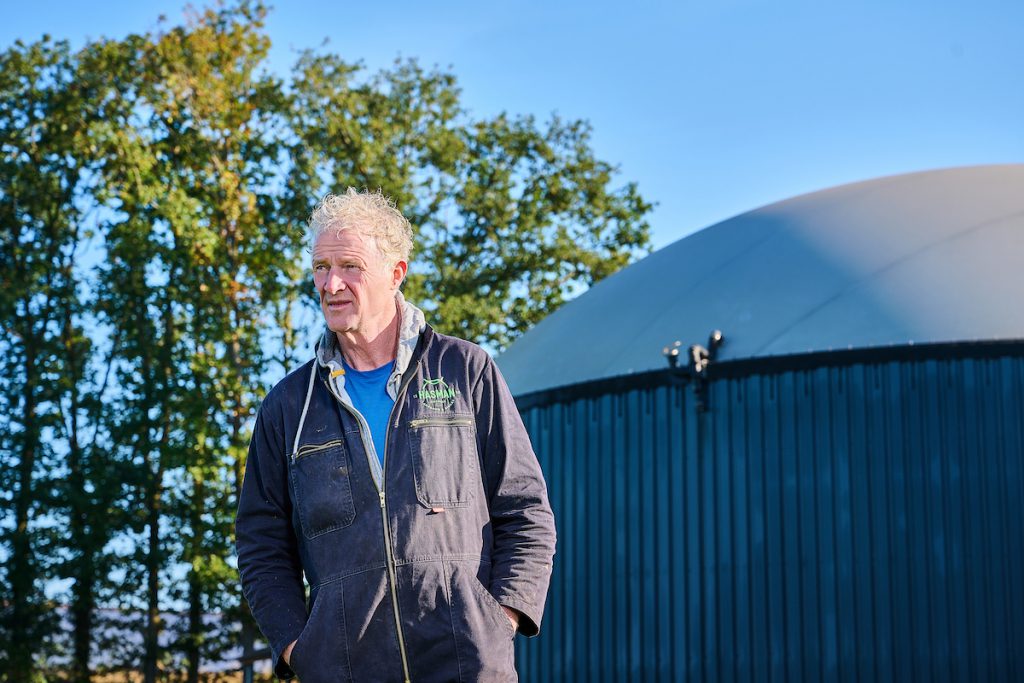
The future
But this future of this dairy farm, like so many others at the moment, is uncertain. Hasman is located in the middle of a Natura 2000 site, as a result of which a procedure was started in 2013 to change the zoning of a large part of the land from an agricultural to a natural function. This procedure is still ongoing. Recent plans to buy out farmers have also affected Hasman.
‘We saw the first expropriation plan recently,’ says Hans. ‘It contemplated the expropriation of half our company. That would have paralysed us, but fortunately, the Council of State annulled this plan. We won the first battle.’
Nature management and heathlands
What will happen next is unclear. In any case, Hans doesn’t really believe in the nitrogen discussion. ‘Our natural areas are doing fine,’ he says. ‘The idea that nitrogen will cause the heath to grow over is a myth. What’s more important is nature management. Private individuals generally maintain the heathlands well, but unfortunately the same can’t be said about land management organisations.’
‘Heathland isn’t actually a natural landscape anyway, it’s man-made,’ Hans continues. ‘You have to scrape the vegetation and top layer (sods) off the area once in a while. In the past, these sods ended up in the deep litter shed, but nowadays no money can be made from this method. As a result, the sods are no longer removed, with the landscape growing over as a result.’
Hans explains that farmers used to put the sods in the deep litter sheepfold, after which they were covered and enriched with minerals from manure. ‘The sods were then taken to Essen in Twente, and used as fertiliser for grain cultivation. On the other hand, the wet grassland there wasn’t drained, so a very specific type of vegetation developed. This variety is what makes it so special. With the advent of chemical fertiliser, the need for sods and sheds where it could be converted into fertiliser disappeared. This has changed the landscape.’
Manure digester
Hasman manages approximately 40 hectares of land, consisting of woodland, heathland and botanical grasslands. ‘We’re promoting biodiversity in various ways; one example being creating herbaceous field margins. This not only provides an attractive living environment, it also attracts many beneficial insects. We can’t use the biomass from these field margins as animal feed, but we can process some of it in the manure digester to produce biogas.’
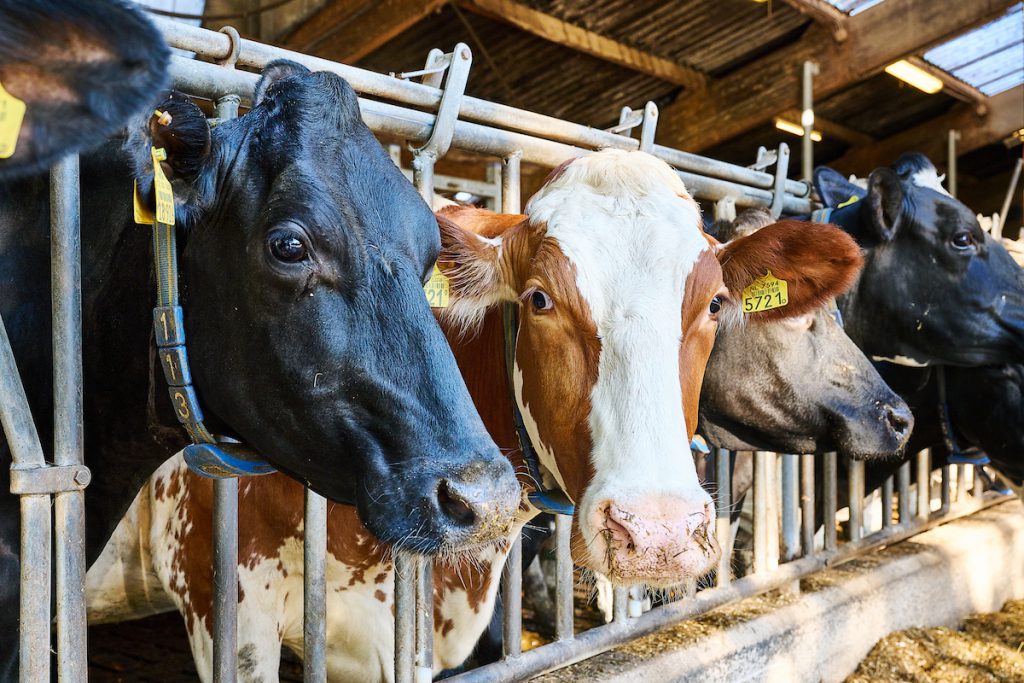
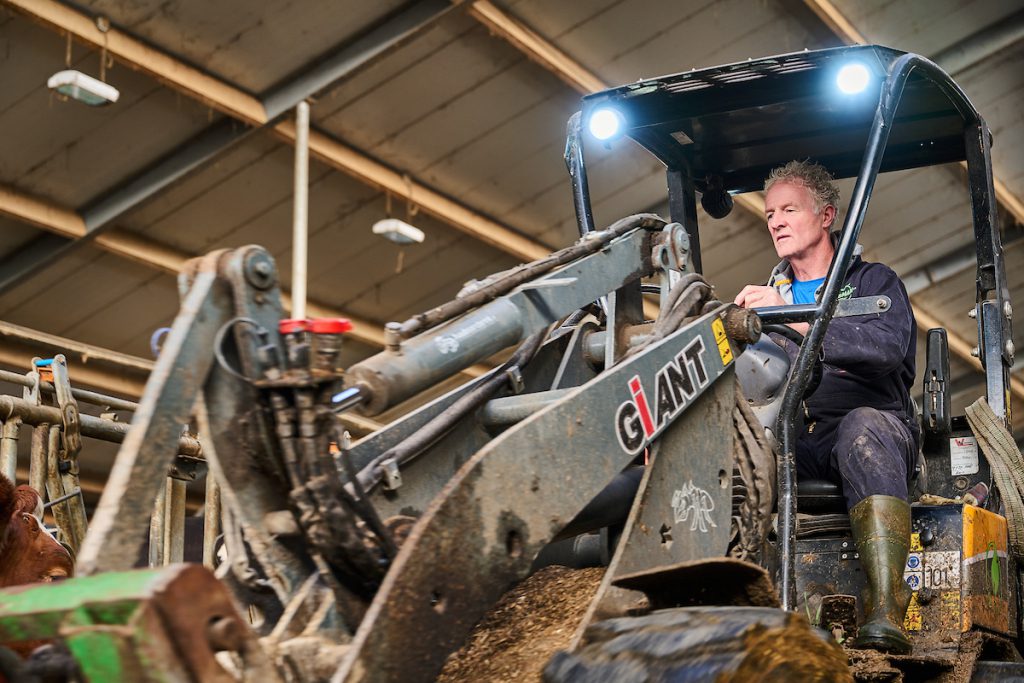
A lot of this biomass eventually ends up in Hasman’s manure digester via the cowshed. ‘All the manure we collect from our 400 cows in the cowshed goes into the digester the same day,’ explains Hans. ‘We remove manure and urine very quickly and we have an emission-free floor, so barely any methane and ammonia are released during this process. That only happens in the digester that converts the substances into biogas.’
The biogas produced is combined with the biogas from the digesters of 5 other local dairy farms. This gas is supplied to 2 local companies via a pipeline specially constructed for this purpose. ‘As a result, these companies need less natural gas,’ says Hans. ‘It’s a sustainable solution in the energy transition.’
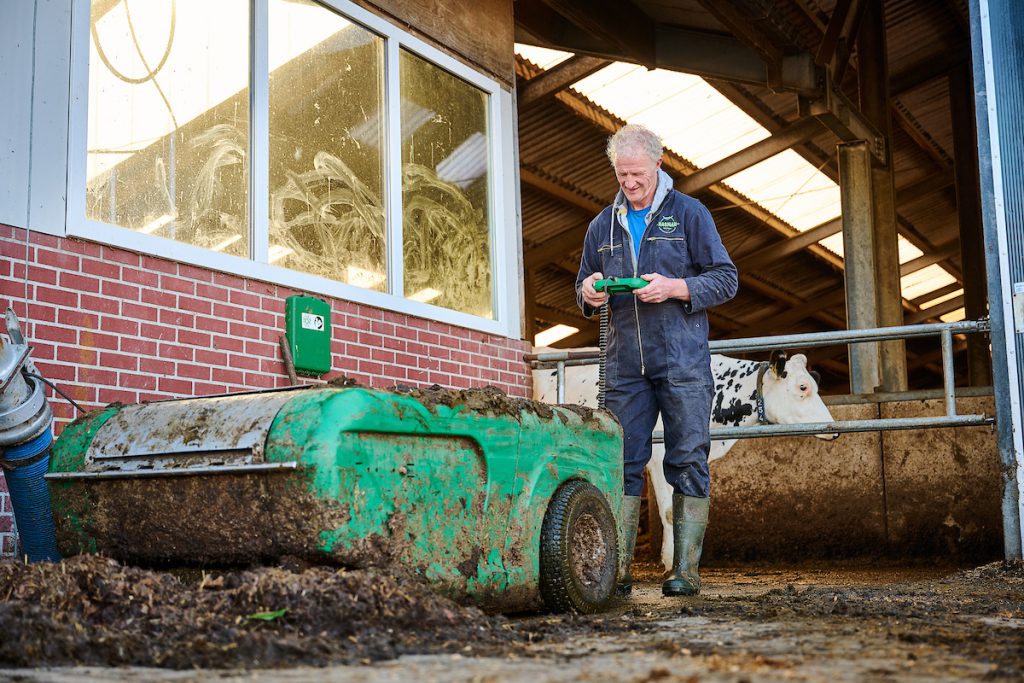
Barn-E manure robot
How does Hasman get manure into the digester as quickly as possible? After all, every day, or even every hour that the manure remains exposed to the air, methane is lost. ‘We use a JOZ Barn-E manure robot for this,’ says Hans. ‘We want to bring the manure to 1 central discharge point. With the Barn-E, we don’t have to install extra manure alleys and pumps. For farmers who want to use as few discharge points as possible, this manure robot is a great solution.’
‘Another advantage of the Barn-E is that it uses no water, because water is just ballast for the digester. This robot would also work well with thicker substances such as horse manure, I think. The Barn-E doesn’t ‘suck up’ the manure, but ‘spoons it in’, which makes this manure robot suitable for multiple purposes.’
More info?
If you’d like to find out more about circular solutions for your barn, please contact JOZ. Our experts will be happy to help you.