


'I want to bridge the gap between farmers and consumers'
Birkel Family
200 dairy cows
1 Barn-E Manure robot
Reading time: 5 minutes
We last visited dairy farmer Rens Kooijman about 2 years ago, when he spoke about the best way to clean his barn. How is he doing now? How has his dairy farm changed? What decisions have been made, and what’s he concentrating on at the moment? Rens explains.
Freedom
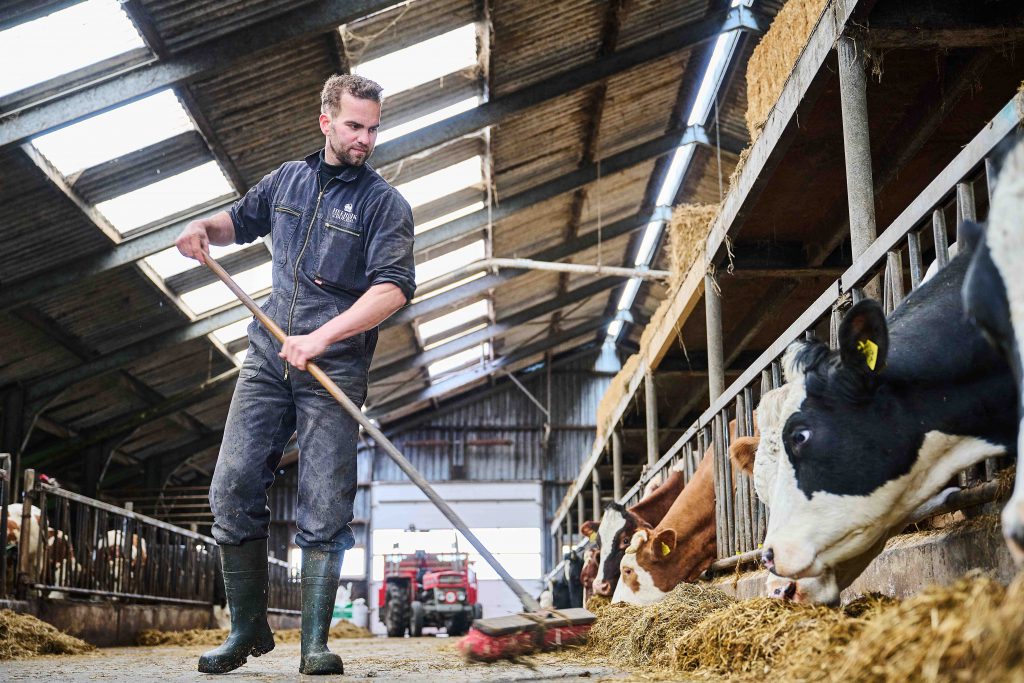
A lot can happen in 2 years, as became clear during our chat with Rens. The dairy farmer has since become a father, and a second baby is already on the way. ‘It’s the best thing that could have happened,’ says Rens. ‘It’s fantastic watching our son doing the same round around the yard with his tricycle every day. He checks out the calves on his way, then passes by the older animals. I’m so happy that we can pass this life on to our children, you can’t put a price on such freedom.’
Higher income with existing livestock
Rens hasn’t expanded the herd of cows on his farm much in recent years, but the farm has evolved all the same. ‘About 6 years ago, I put pen to paper and wrote down my personal vision,’ he explains. ‘I broadly described how I want to further develop myself and the farm. The main concern wasn’t to increase the size of the herd, but the challenge of improving income with the existing livestock. That suits me.’
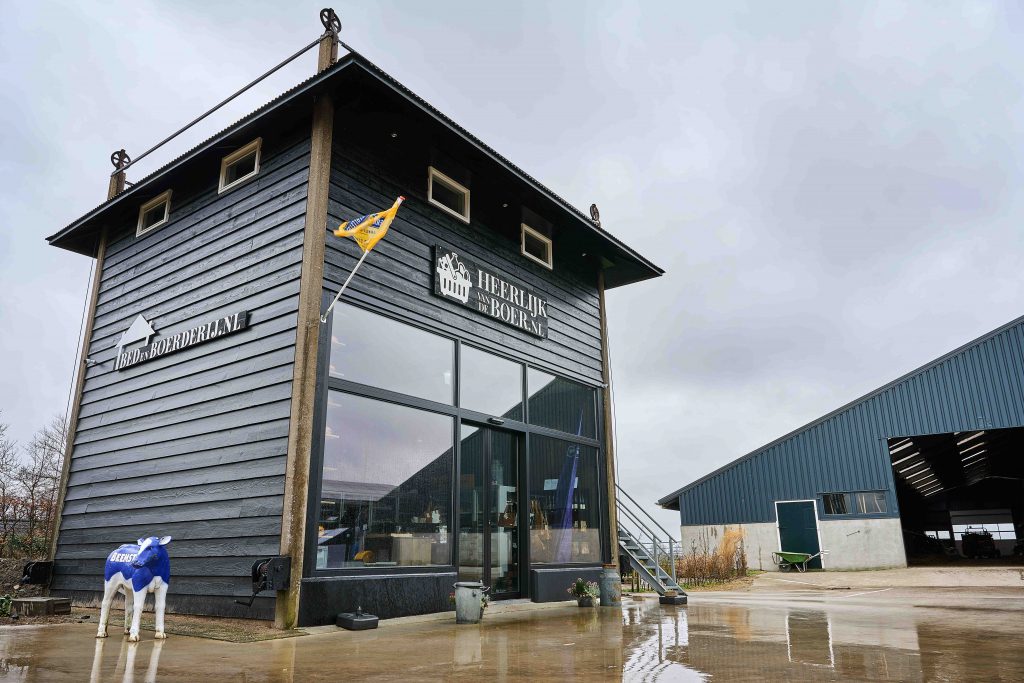
‘‘My main focus is on bridging the gap between farmers and the general population, so that people understand how a farm works. We’ve adapted our commercial activities accordingly, for example, we opened a farm shop and started a Bed &Breakfast.
Farm shop
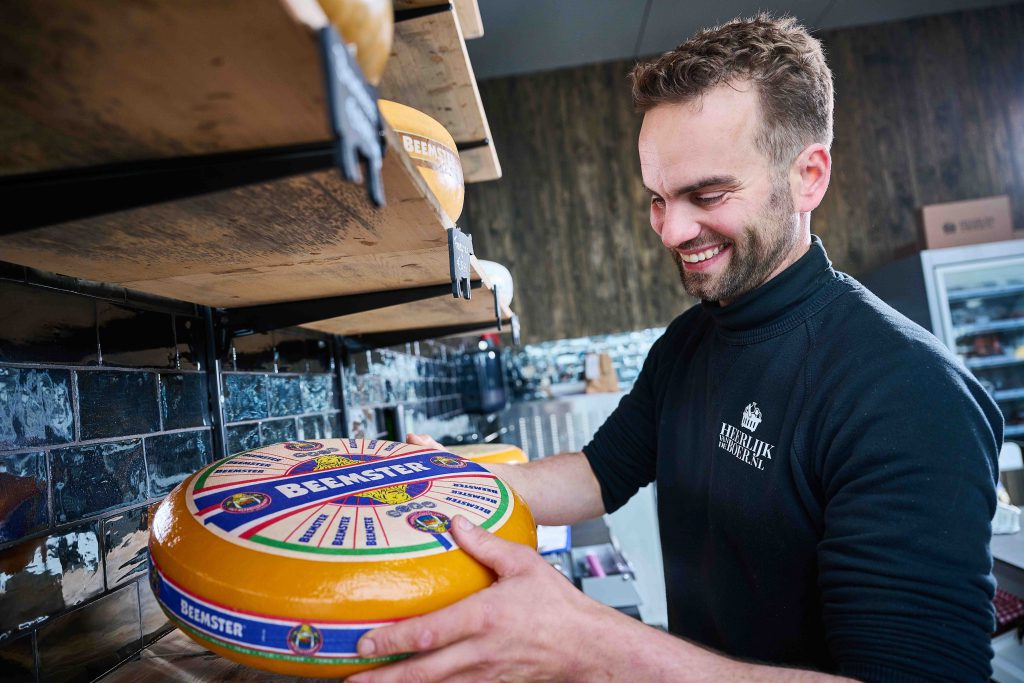
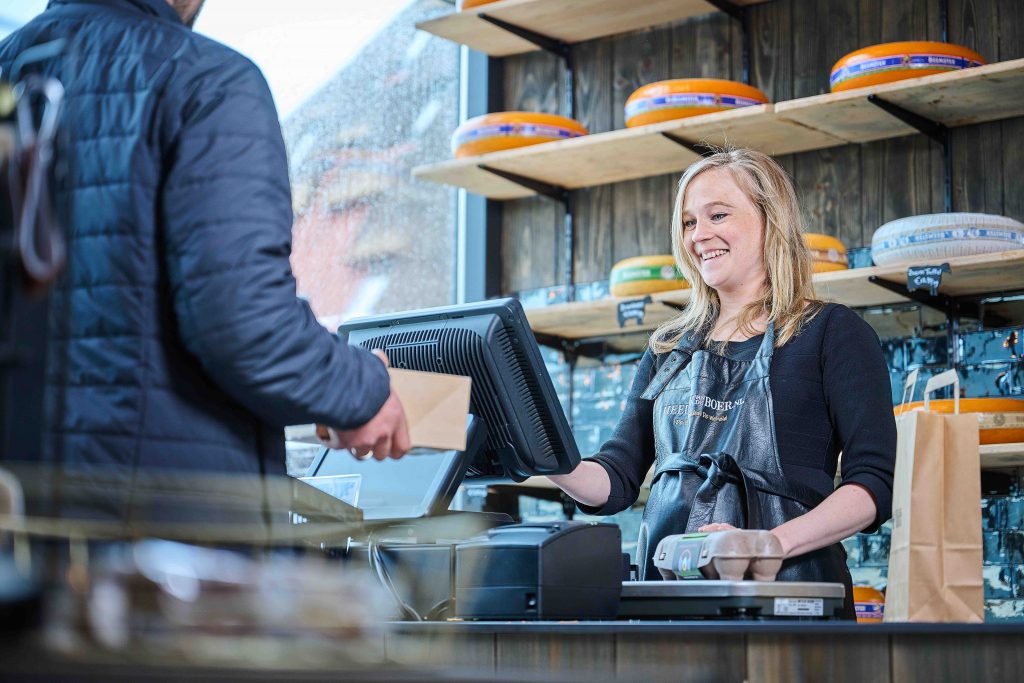
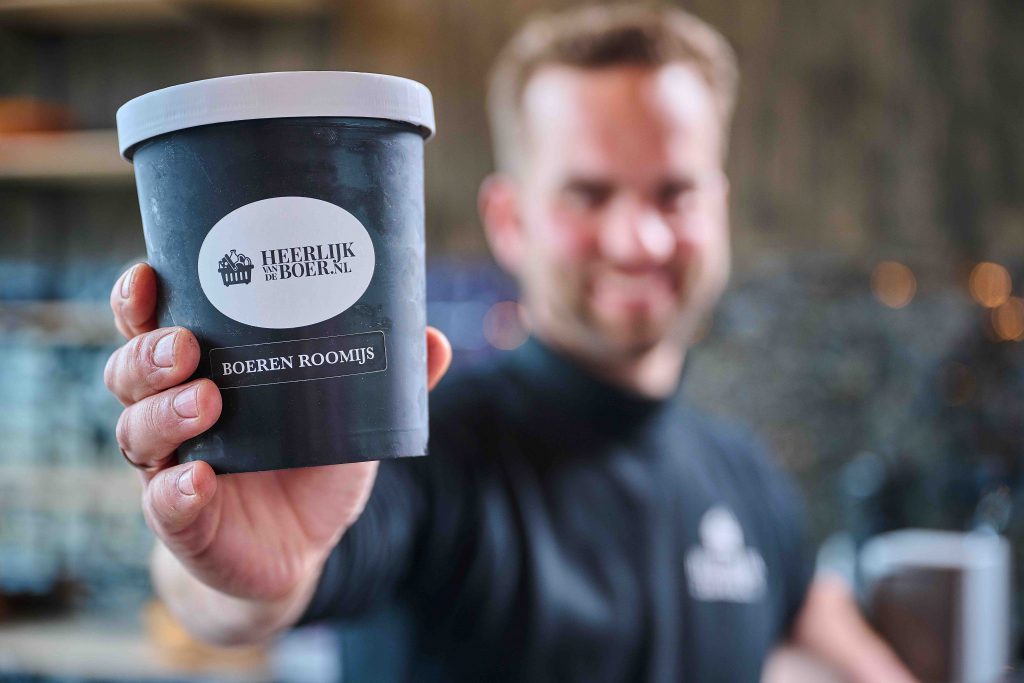
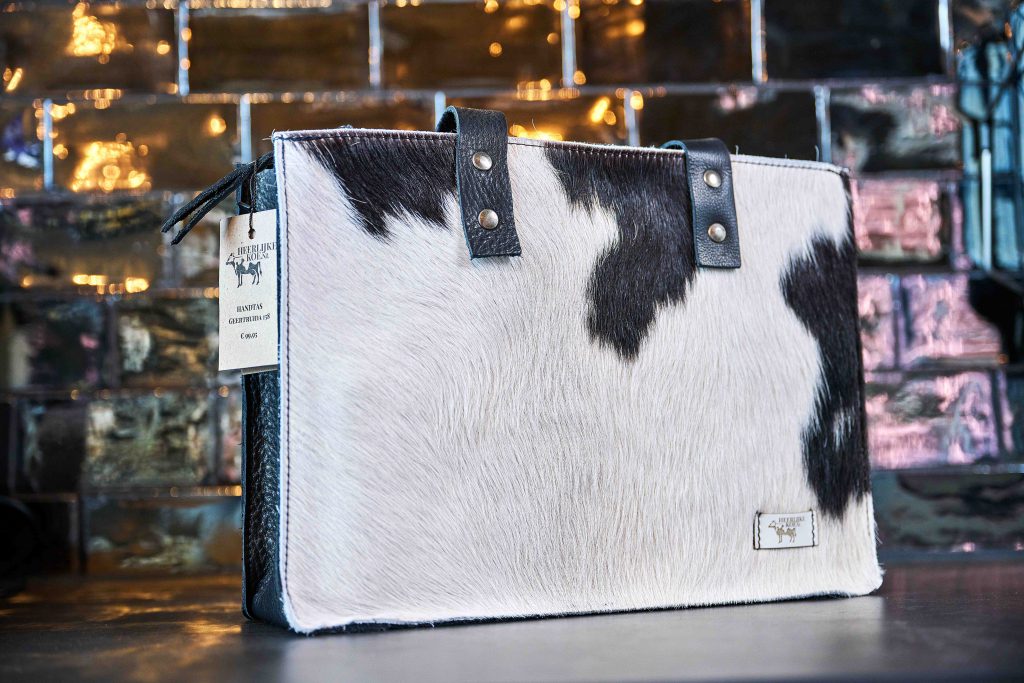
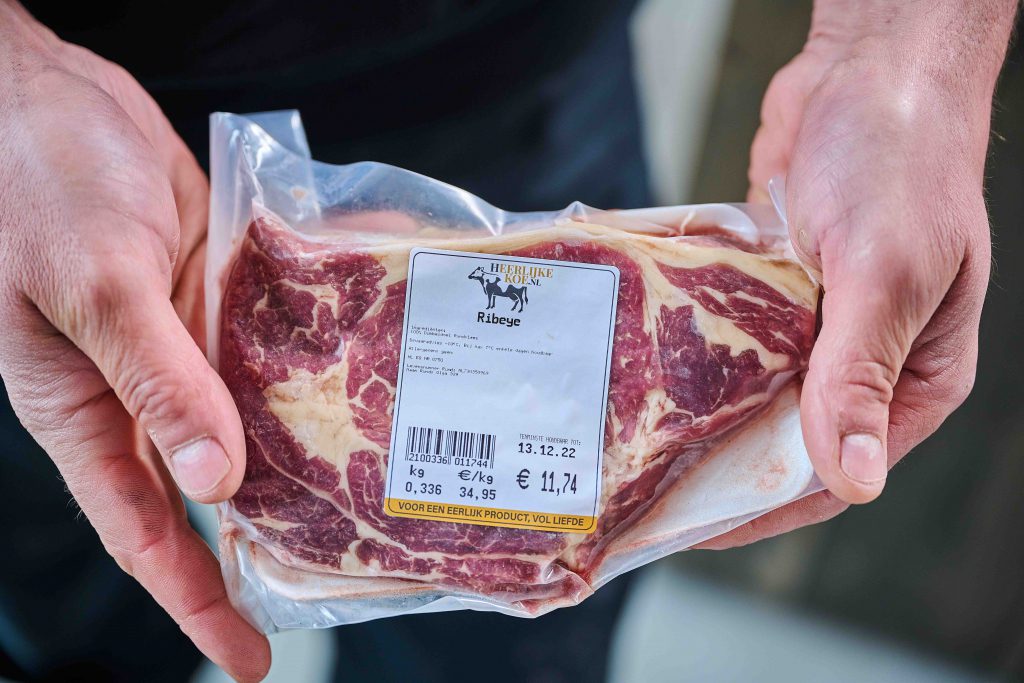
In the farm shop, Rens and his family sell all kinds of things related to their dual-purpose cows. Rens: ‘We sell 20 types of Beemster cheese, for example, which are made from our own milk. We also sell meat from our own cows, homemade ice-cream, and even bags made from the hides.’
‘We use absolutely everything from the cow. We take good care of our animals during all their years on the farm, and give them a nice stage at the end,’ Rens continues. ‘I therefore made a very deliberate decision to keep dual-purpose cows. That means we use them initially for their milk, and then for their hides and meat at a later stage.’
‘Our Fleckvieh breed can convert grass into both meat and milk. The rations our cows eat are also natural, and grown here on the farm as much as possible. ‘We prefer to give them as few by-products as possible, such as maize and pressed pulp. On the other hand, we give them as much grass as we can, which improves the flavour of the meat.’
Bridging the gap
‘’People are more and more interested in local products,’ says Rens. ‘We have visitors here all day long, which is great, but that doesn’t happen automatically and we do make a lot of effort to encourage them to come here. For example, we organize various events. ‘These include open days with live music, fun BBQs, and farmers’ markets. ‘We even organize a dinner among the cattle, where a chef prepares a 4-course dinner surrounded by the cows, using mainly our own products.’
In addition to all the work on the farm, the shop and the events, the dairy farmer also has a B&B to run. ‘My wife and mum generally deal with that side. In addition to a bed and a delicious breakfast with local products, we always give our guests an extensive tour of the farm. They can also help out on the farm if they want to. It’s great to be able to bridge the gap between farmer and consumer in this way.’
Clean barns and low maintenance
When we spoke to Rens 2 years ago, he told us about the solid floor in his barns. ‘As every dairy farmer knows, it’s a challenge to keep a solid floor clean. Fortunately, we’ve got that well under control thanks to the flex scrapers from JOZ. We use long straw in the boxes, so it’s important that the scrapers can shift a lot of weight. Moreover, because the scraper is so narrow, it takes almost no straw back in the return movement, so perfect for my barn.’
‘‘We’ve also noticed that we chose a system that doesn’t wear out quickly, thanks to the chain drive. You have to replace the chain sprockets every year with most systems, but I never have to do that anymore. Perfect.’
The future
What does the future look like for Rens and his farm? Rens: ‘Farmers are facing lots of changes to the rules, but companies are coming up with brilliant solutions to reduce nitrogen, such as JOZ’s Gazoo nitrogen cracker. However, government policies are constantly changing, which makes it difficult to make the right decisions. For example, does a new low-emission floor actually reduce ammonia? You don’t want to install a completely new floor, then find out that the reduction is less than expected.’
‘In the long run, I’d like to start using manure robots if they can reduce barn emissions. Only thing is, I need a compact version for my barn, otherwise it won’t fit.’ Duly noted, Rens! Erik Danes will pay you a visit soon to discuss the possibilities.